
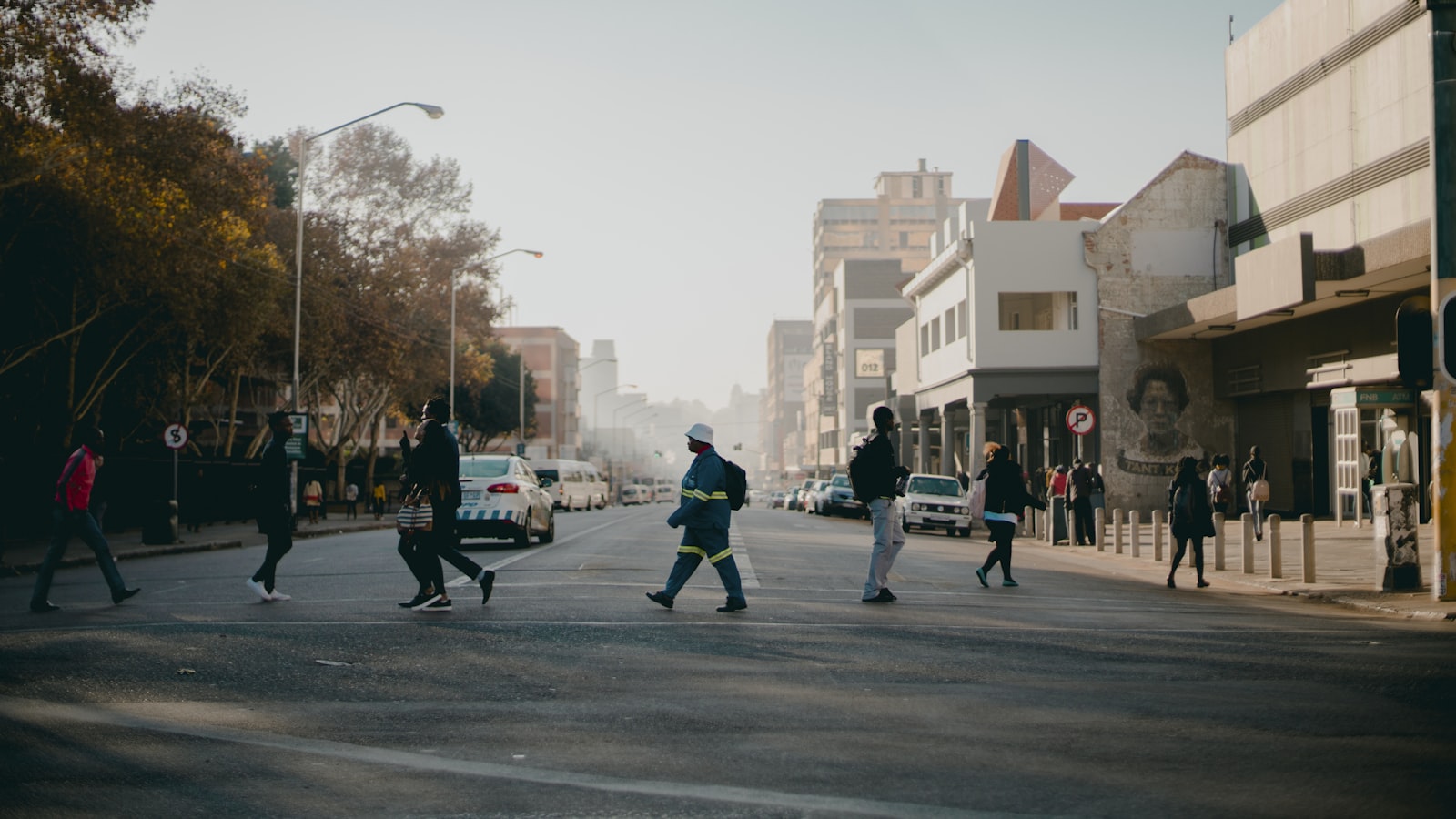
For millions of people who live and work in Africa's major cities, personal safety has stopped being an occasional concern and become part of the daily routine. From Johannesburg to Lagos, from Nairobi to Luanda, walking across town, taking public transport or simply heading home at dusk demands a level of attention that elsewhere would be unnecessary.
The good news is that much urban crime follows recognisable patterns — and most incidents can be avoided with simple habits, awareness of your surroundings and the right support when something goes wrong. Protecting yourself is not about living in fear: it is about living with method.
Why personal safety is a priority
A phone, a wallet or a watch can be replaced. Physical wellbeing cannot. Unlike the silent theft of belongings, crime against the person — the armed robbery, the snatch-and-grab on the street, the express kidnapping in which the victim is forced to withdraw cash from an ATM — carries a cost that goes far beyond the material: it leaves marks, disrupts routines and limits the freedom to move around.
That is why personal prevention deserves the same care we devote to locking our front door or protecting our vehicle. It is not about avoiding city life, but about reducing your exposure and ensuring that, when the worst happens, there is always someone ready to respond.
The landscape of urban crime in African cities
The pattern repeats across many of the continent's urban centres: strong demographic pressure, sharp inequality and youth unemployment fuel opportunistic crime on the streets, on public transport and at intersections. In South Africa, which keeps some of the most detailed records in the region, victimisation surveys count hundreds of thousands of street robberies per year, and a significant share of the population says they do not feel safe walking alone in their own neighbourhood after dark.
Further north, cities such as Nairobi and Lagos live with assaults on pedestrians, snatch thefts at traffic lights and so-called "pocket crime" on public transport. The most common targets are almost always the same: phones in plain sight, poorly secured backpacks, jewellery and anyone walking distracted or predictable. Recognising these patterns is the first step to no longer being an easy target.
Situational awareness: the first line of defence
The most effective measure costs nothing: attention. Most attackers look for the most off-guard victim, not the wealthiest. Someone who walks with their head up, alert to their surroundings and looking like they know where they are going is simply approached less often.
- Put the phone away on the street. Typing as you walk or wearing headphones cancels out the two senses — sight and hearing — that you need to detect someone approaching.
- Trust your instinct. If an alley, a group or a situation feels wrong, change your route without hesitation. A detour is always worth more than a regret.
- Keep valuables out of sight. A discreet phone, cash and documents reduce the attacker's impulse.
Routines and behaviours that reduce risk
On the street and on foot
- Choose busy, well-lit streets, even if the route is longer.
- Walk against the direction of traffic, so no one can follow you on a motorbike without being seen.
- Avoid always taking the same times and routes — predictability is a vulnerability.
On the move and on transport
- In traffic jams and at lights, keep the windows closed and your belongings off the passenger seat.
- On public or hired transport, share your route and the registration plate with someone you trust.
Arrivals and departures
- When you reach home, watch the street before stopping and do not sit motionless at the gate waiting for it to open.
- Agree on a signal or a code word with your family for emergency situations.
The role of technology: never alone
Awareness and good habits reduce risk, but do not eliminate it. This is where technology changes the game — above all in the moment when something goes wrong and every second counts.
- Personal trackers and SOS buttons — discreet devices, the size of a keyring, that with a single press send a call for help with the exact location to a monitoring centre.
- Location sharing — lets your family or a 24/7 centre know where a person is in real time, ideal for anyone who travels, works at night or moves through high-risk areas.
- Geofences and alerts — notify family members when someone arrives at or leaves a defined location, giving peace of mind to those waiting.
The value lies not just in the device, but in the response: a panic button only truly protects you when, on the other end, there is a centre ready to act and to call on those who can help.
How Iberian Secure helps
At Iberian Secure we combine discreet GPS trackers with a monitoring centre operating 24 hours a day, designed for the reality of African cities. More than selling a device, we design a layer of protection tailored to each person — whether a professional who travels at night, a more vulnerable family member or a team in the field.
The first step is simple: a no-obligation Risk Assessment, in which we identify your everyday vulnerabilities and propose the right solution so that no one is ever alone.
Data source: Statistics South Africa, Governance, Public Safety and Justice Survey (GPSJS) 2024/25.
